🗓️ Day 47 - Niagara
+ Chile's climatic challenges
💪 Warm-up question
Happy Monday. Ready to start the week with some quick factual recalls?
Take out your notebook and a pen, or load your phone’s note app. List at least four climatic challenges Chilean wine regions face. The more numeric and factual, the better.
They can be generic or specific to a region. Also, think about how you can frame these challenges as threats and/or weaknesses in an exam setting.
Three. Two. One. Let’s go!
You will find the answer to this warm-up exercise at the end of this entry. But please give it a go yourself first 😉

✍️ Past exam question
Question six from the October 2022 exam
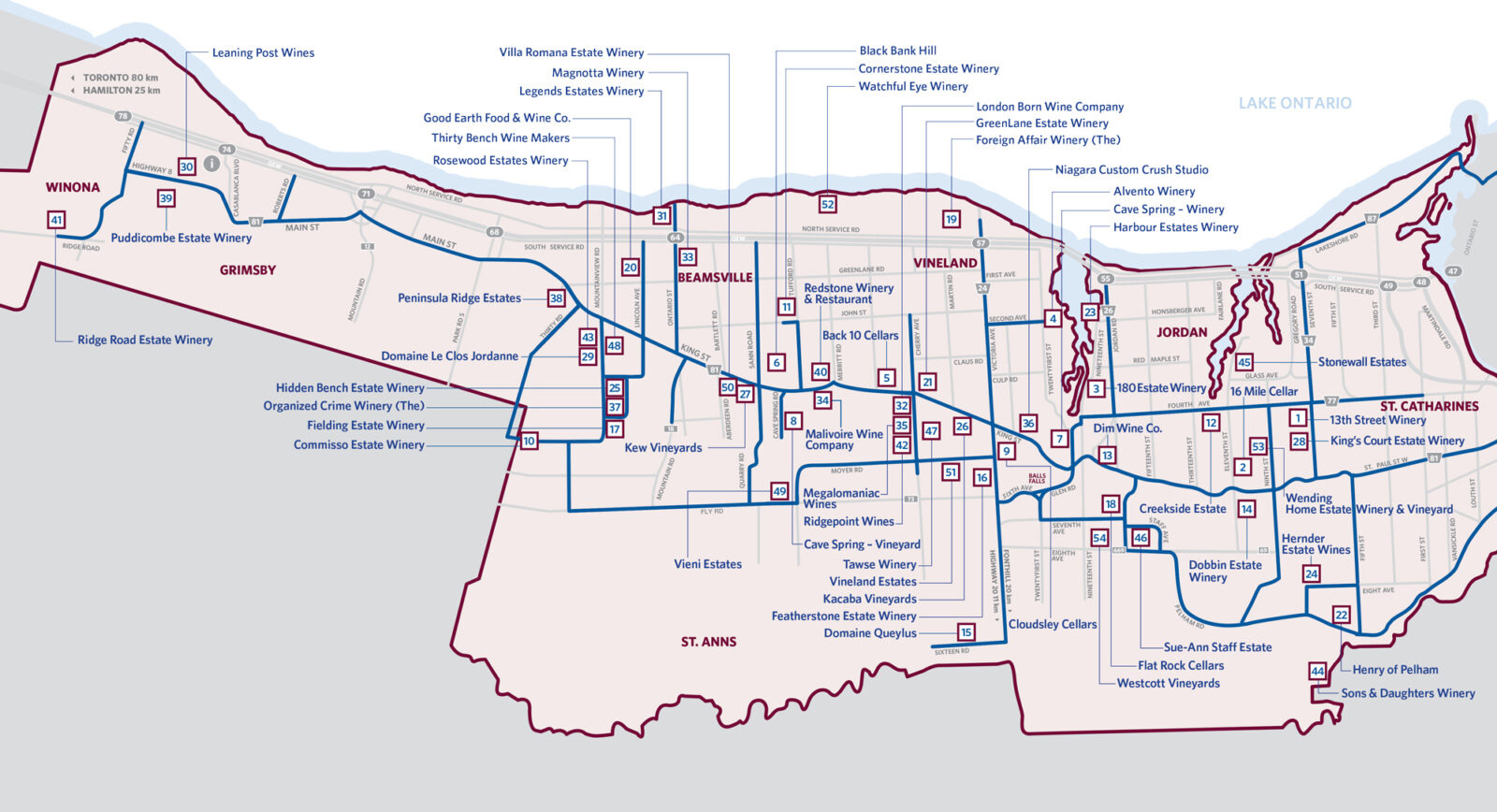
Explain how factors in the vineyard influence the production of wines in the Niagara Peninsula.

💡 Examiner’s feedback
© Wine & Spirit Education Trust (WSET)
Unsurprisingly for a question on a fairly niche region, the number of candidates attempting it was modest. The quality of answer was wide-ranging with a relatively high number of distinctions. In these cases candidates linked in-depth knowledge of the area (and its sub-regions) with influences in the vineyard to determine how specific styles of wine are produced.
Encouragingly, the large majority of candidates correctly located Niagara Peninsular, identified its climate and the influence of the lake, and highlighted the primary wine styles e.g., Icewine. However, within these parameters answers were variable in quality with common pitfalls including:
Identifying vineyard factors but not applying to wine production.
Describing wine styles but not applying to vineyard factors.
A lack of explanation of how vineyard factors and wine production are interrelated.
An excessive focus on winemaking (typically for Icewine) without links to vineyard factors.
Misclassifying climate and misidentifying geography (although appropriate tolerance was given).
A failure to acknowledge styles other than Icewine.
More fundamental errors included the failure both to mention the influence of bodies of water and of Icewine as a key style. In such instances fail grades were almost inevitable. This was also the case when answers were too short. The examiner noted the large number of scripts consisting of less than one side of writing. Realistically, this is not enough to contain sufficient facts and their application to receive a successful outcome. As a point of calibration, most passing answers are at least two sides long.

👀 Answer to today’s quiz…
El Niño and La Niña: El Niño which brings much higher than average rainfall, while La Niña years experience much lower rainfall or drought.
These phenomena contribute to significant vintage variation, impacting grape development and making having a consistent style much more difficult.
Excessive rainfall from El Niño does not only disrupt pollination and fruit set,increase vegetative growth, and hinder ripening; it’s also associated with hurricanes.
General drought and water scarcity: Despite some areas being wetter, many regions, especially northern and inland areas, experience low annual rainfall (as low as 80 mm per annum in Elqui).
Over 85% of Chile’s vineyards needs irrigation, adding to production cost.
Climate change is causing average temperatures to rise and snowfall in the Andes to reduce, thereby further limiting access to water.
Chilean government estimating that 95% per cent of the country’s vineyard area will have shortages of irrigation water by 2050.
Intense sunlight: Chile's relatively low latitude results in intense sunlight. Combined with drought and high temperature, intense sunlight can cause browning and disrupt ripening. This is of course both a strength and a weakness.
Spring frosts: In specific areas, such as low-lying vineyards in the Casablanca Valley, spring frosts can be particularly severe.
Fungal siseases: Some coastal areas experience higher humidity, making fungal diseases an issue. In the Southern Region (e.g., Bío Bío Valley), rainfall regularly exceeds 1,000 mm, and summer temperatures rarely exceed 30°C, making fungal disease a problem.
Forest fires and smoke taint: Forest fires are a particular hazard in Chile, fueled by commercial forestry, and vineyards near these fires can be affected by smoke taint in the grapes.
Earthquakes: Chile is also prone to earthquakes that can directly damage vineyards and wineries.
Quick references
WSET Diploma in Wines D3 textbook p95, 193, 492-503, 515 and 522.
Have a great start to the week!